

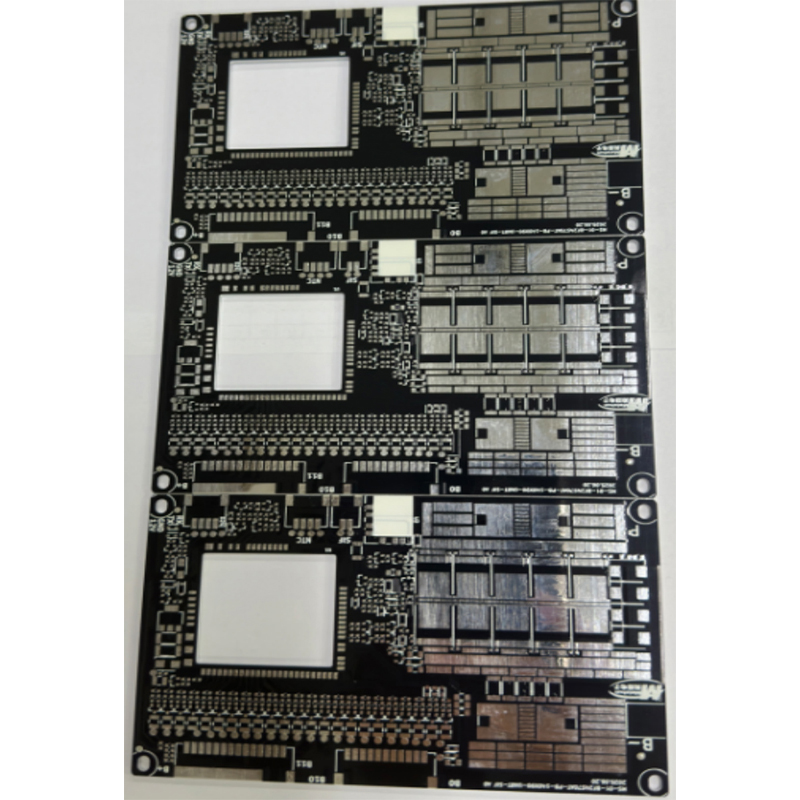
This product is a single-sided aluminum-based printed circuit board with tin-sprayed surface finish, designed for high-efficiency heat dissipation, stable solderability, and cost-effective electronic assembly. The aluminum core provides excellent thermal conductivity, while the tin-sprayed layer ensures reliable surface protection and solder performance.
Aluminum-based substrate: Excellent heat dissipation and mechanical strength
Single-sided circuit structure: Simple design with stable electrical performance
Tin-sprayed surface finish (Sn coating): Enhances solderability and anti-oxidation capability
High thermal management performance: Ideal for heat-sensitive electronic components
Strong coating adhesion: Durable surface layer with long service life
Cost-efficient solution: Suitable for mass production and industrial applications
Board type: Single-sided aluminum PCB
Base material: Aluminum alloy (various grades available)
Surface finish: Tin spraying (Sn coating)
Tin thickness: 5–30 μm (customizable)
Copper thickness: 1 oz / 2 oz (customizable)
Dielectric layer thermal conductivity: 1.0–3.0 W/m·K (optional)
Board thickness: 0.8 mm – 2.0 mm
Operating temperature range: -40°C to 120°C (typical)
Dimensional tolerance: ±0.01–0.05 mm
LED lighting modules and LED driver boards
Power supply systems
Automotive lighting and auxiliary electronics
Industrial control equipment
Consumer electronics
Heat-dissipating circuit assemblies
Compared with standard FR-4 single-sided boards, this aluminum-based tin-sprayed PCB offers:
Significantly improved heat dissipation performance
Better stability under high-power operation
Enhanced solderability for assembly processes
Improved oxidation resistance during storage and use
More reliable long-term electrical performance
Aluminum alloy grade selection
Dielectric thermal conductivity customization
Tin spraying thickness adjustment
Board size and thickness
Single-sided or selective tin coating
Solder mask color options
Each board is manufactured under strict quality control standards, including:
Electrical continuity and insulation testing (E-test)
Surface coating uniformity inspection
Solderability testing
Thermal performance verification
Dimensional accuracy inspection
AOI (Automated Optical Inspection)