
The strategic partnership with the leading brand Midea in the home appliance industry

Under the wave of intelligent home appliances and industrial manufacturing upgrades, a small PCB circuit board is the core “nerve center” of smart home appliances, carrying the stability, safety and intelligent experience of the products.

After years of deep involvement in the PCB manufacturing field, we have always adhered to the original intention of “producing high-quality products with meticulous craftsmanship and building trust with reliability”, focusing on the research and development and batch production of high-quality home appliance and industrial control PCB circuit boards. From raw material selection, precise line etching, multi-layer lamination, to non-destructive testing and compliance manufacturing, we have established a full-process standardized production system, strictly adapting to the high-frequency usage, high and low temperature compatibility, and long-term stable operation core requirements of smart home appliances, perfectly matching the strict production standards of Midea’s full range of home appliances.

In 2012, we passed the strict supply chain standard assessment of Midea Group and were selected as its high-quality partner, establishing a long-term in-depth strategic cooperation relationship. Midea covers multiple product lines such as smart home, white goods, and industrial control, with fast product iterations, tight delivery cycles, and high quality standards. It has industry-leading assessment standards for the precision, stability, consistency, and delivery efficiency of PCB boards.

To meet the large-scale and high-quality production needs of Midea, our factory continuously iterates production equipment and technical processes, upgrades automated production lines, and optimizes the full-link quality control system. Relying on mature batch production capabilities, flexible order response mechanisms, and strict quality inspection processes, we precisely undertake the customized and batch delivery requirements of Midea’s various home appliance PCBs.

Now, we produce a large number of PCB orders for Midea every month. This is the strongest recognition of Midea’s factory by our factory’s PCB R&D, production, and quality control capabilities.

In the future, our factory will continue to strictly require itself with the standards of leading brands, continuously improve processes, upgrade production capacity, and optimize services. Relying on the deep strategic cooperation experience with Midea, we will polish higher-quality PCB products, empower more home appliance, industrial control, and intelligent terminal enterprises, with meticulous craftsmanship to help the industry manufacturing upgrade, and jointly create a win-win future with customers!
Future Price Trend of CCL

Future price trend of CCL:

1. In the second half of 2026: The overall price will remain on the rise, and some categories may experience shortages.

2. In the first half of 2027: There will still be an increase, but the amplitude will be smaller. In the second half: The price will stabilize slightly.

3. From 2028 and beyond: Supply and demand will be balanced, and the price will enter a stable cycle.

 Four core reasons for the continuous increase in copper clad laminate (CCL) prices (2025–2026 cycle)

1. The upstream three major raw materials are all in short supply and costs are rising rigidly (the most direct driving force)

Cost composition of copper clad laminate: copper foil 35%–40%, glass fiber cloth 20%–25%, epoxy resin 15%–20%. The simultaneous price increase of all three factors combined has forced CCL factories to pass on costs passively.

a. Electronic glass fiber cloth (7628/2116/1080): The monthly industry shortage is 40 million meters, and the annual shortage is 4–500 million meters. A-level spot goods are almost out of stock; the ultra-thin cloth production capacity is locked by AI orders, the regular E cloth supply is squeezed, and the more basic specifications are even more in short supply. The glass fiber kiln furnace expansion cycle is 2–3 years, and the new capacity added in 2026 can only slightly alleviate the shortage and cannot fill the gap.

B. Copper foil: The LME copper price is in a high-oscillation state; the gap for AI server-specific HVLP4/5 high-end copper foil is over 50%, the processing fee has doubled year-on-year, and the delivery period is 3–6 months; lithium battery copper foil and electronic copper foil share production lines, and the production capacity is continuously diverted, and the ordinary standard copper foil also experiences price increases simultaneously.

C. Epoxy resin: The war in the Middle East has pushed up the monomer price, and it is now somewhat stable, but even if the war ends, the price cannot be lowered for a while. The supply chain is disrupted and it will take a certain amount of time to restore.

2. The explosive demand for AI computing power has formed a structural supply-demand gap (the core driver of the demand side)

Ordinary server PCBs are only 8–16 layers, and the usage of CCL per unit is low; AI server GB200/Rubin series PCBs have 20–78 layers, and the usage of CCL per unit is 5–8 times that of traditional servers and is more than 5 times in value.

3. The expansion cycle of the entire industry chain is extremely long, and supply cannot keep up with demand in the short term.

Glass fiber cloth kiln furnace: ignition → ramp-up and stabilization for 2–3 years;

In simple terms: The demand doubles in one year, but the supply takes 2–3 years to expand, and the supply-demand gap continues to widen.

4. The continuous growth of automotive electronics and communication, combined with low inventory and the rush to stock up

The PCB area per vehicle of new energy vehicles is three times that of fuel vehicles, 800V high voltage, and vehicle Ethernet drive have pulled the automotive-grade CCL to stable growth.

2026 PCB Industry Trends: High-Density Interconnect and AI-Driven Demand as Core Growth Engines

Industry Trend Summary:

The printed circuit board (PCB) industry is undergoing a structural upgrade phase, where overall demand is increasingly driven by AI computing, data centers, automotive electronics, and advanced communications equipment. The industry focus is shifting from volume expansion to high-end manufacturing capabilities and technological differentiation.

First, AI servers and computing infrastructure have become the primary growth driver. The rapid increase in GPU/ASIC computing power is fueling strong demand for high-layer-count, high-speed, and high-frequency PCBs, such as HDI boards and advanced IC substrates (ABF substrates). This is pushing both product pricing and technical barriers higher.

Second, automotive electronics and vehicle intelligence continue to accelerate demand growth. New energy vehicles (NEVs) require higher reliability and more complex PCB applications in ADAS, domain controllers, and battery management systems (BMS), significantly increasing demand for multilayer boards and rigid-flex PCBs.

Third, the evolution of high-frequency and high-speed communications (from 5G toward 5.5G and 6G) is driving adoption of low-loss materials (such as M7/M8-grade laminates) and more precise manufacturing processes, pushing simultaneous upgrades in both materials and fabrication technologies.

Fourth, the industry is experiencing structural capacity shifts and differentiation: low- and mid-end PCB segments face intensifying price competition and margin pressure, while high-end segments such as HDI, IC substrates, and advanced packaging-related PCBs are increasingly concentrated in China and Southeast Asia.

Finally, vertical integration across the supply chain is strengthening. Leading manufacturers are expanding into integrated capabilities across materials, design, manufacturing, and packaging collaboration to improve yield rates, increase technological barriers, and enhance pricing power in AI and advanced communication markets.

Overall, the PCB industry is evolving from a traditional electronics supporting sector into a foundational infrastructure layer for computing and intelligent 

HKTDC Fair 2025 Autumu

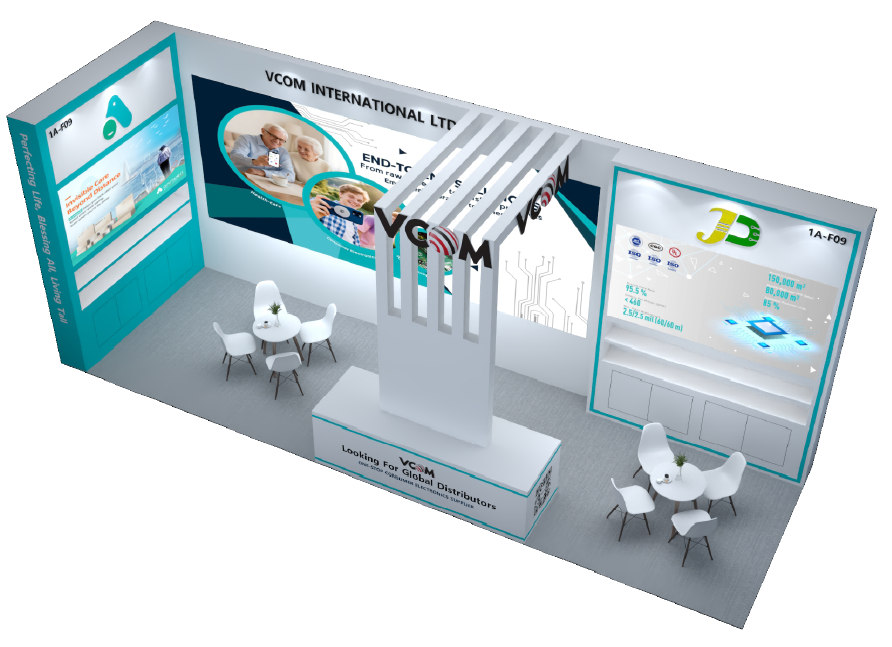
Qilida Electronics Co., Ltd. to Exhibit at HKTDC Hong Kong Electronics Fair (Autumn Edition) 2025

Qilida Electronics Co., Ltd. is pleased to announce its participation in the 45th HKTDC Hong Kong Electronics Fair (Autumn Edition), which will be held at the Hong Kong Convention and Exhibition Centre (HKCEC).

As one of Asia’s leading electronics fairs, the event gathers high-quality suppliers and buyers from around the world. Qilida Electronics will showcase its latest innovations in high-quality Printed Circuit Boards (PCBs) and customized electronic solutions during the exhibition.

We warmly welcome partners and customers worldwide to visit our booth, engage in face-to-face discussions, and explore future cooperation opportunities.

Date: 13–16 October 2025

Venue: Hong Kong Convention and Exhibition Centre (HKCEC)

Booth No.: 1A-F09

Qilida Electronics remains committed to the principle of “Quality First, Customer Oriented” and will continue to provide reliable PCB products and professional services to clients worldwide. We look forward to meeting you in Hong Kong!